
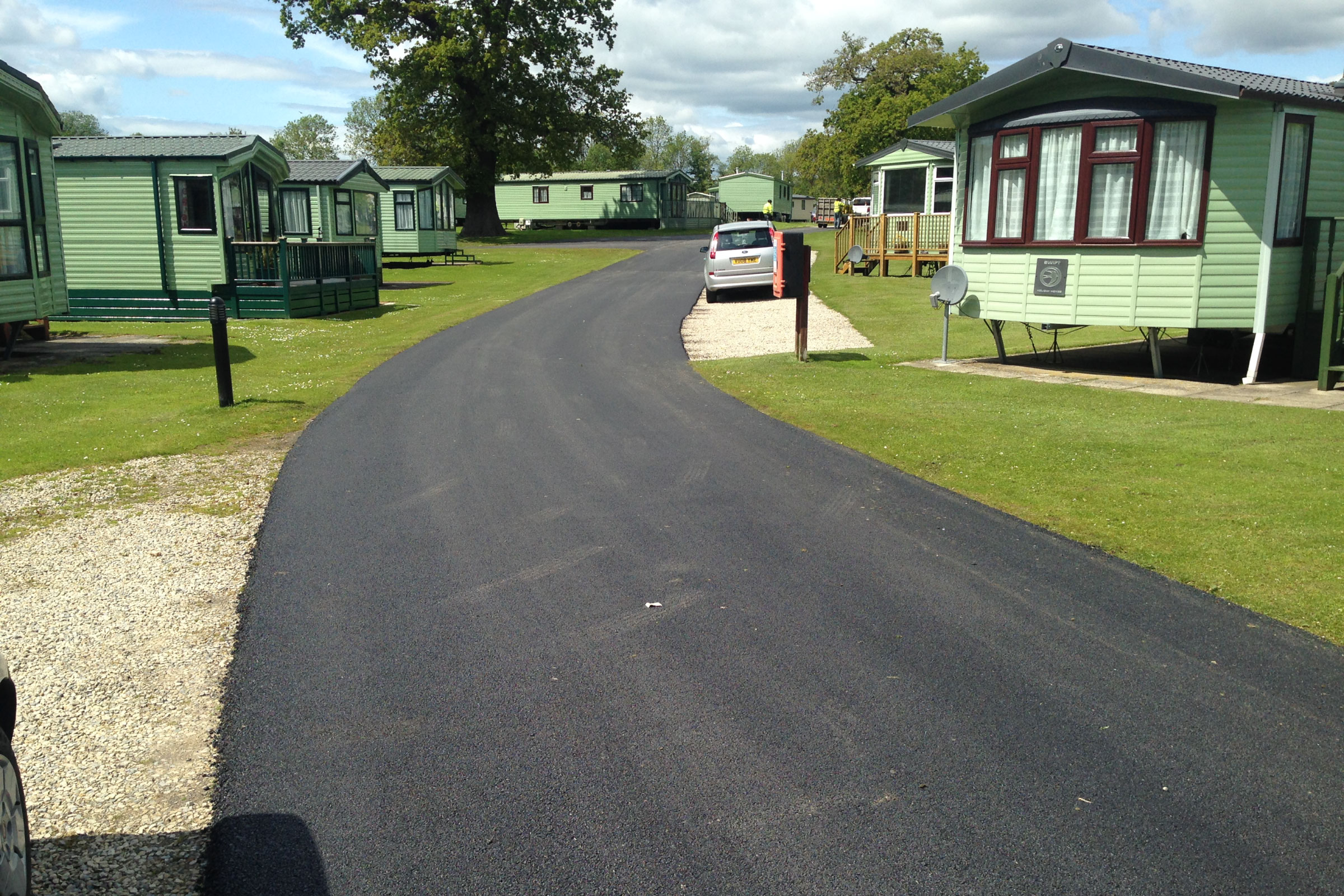
Surfacing contractors, Malton, North Yorkshire

Tarmac Surfacing

Tarmacadam is most of what we do. Laid on ground that has been prepared properly, it carries cars, wagons and farm traffic without breaking up at the edges.

What tarmac actually is

Tarmacadam is stone graded to a set size, bound together with bitumen and laid hot. It is rolled while it is still hot, which is what locks the stone together and gives the finished surface its strength. It comes in black and in red, and it can be laid by machine or by hand.

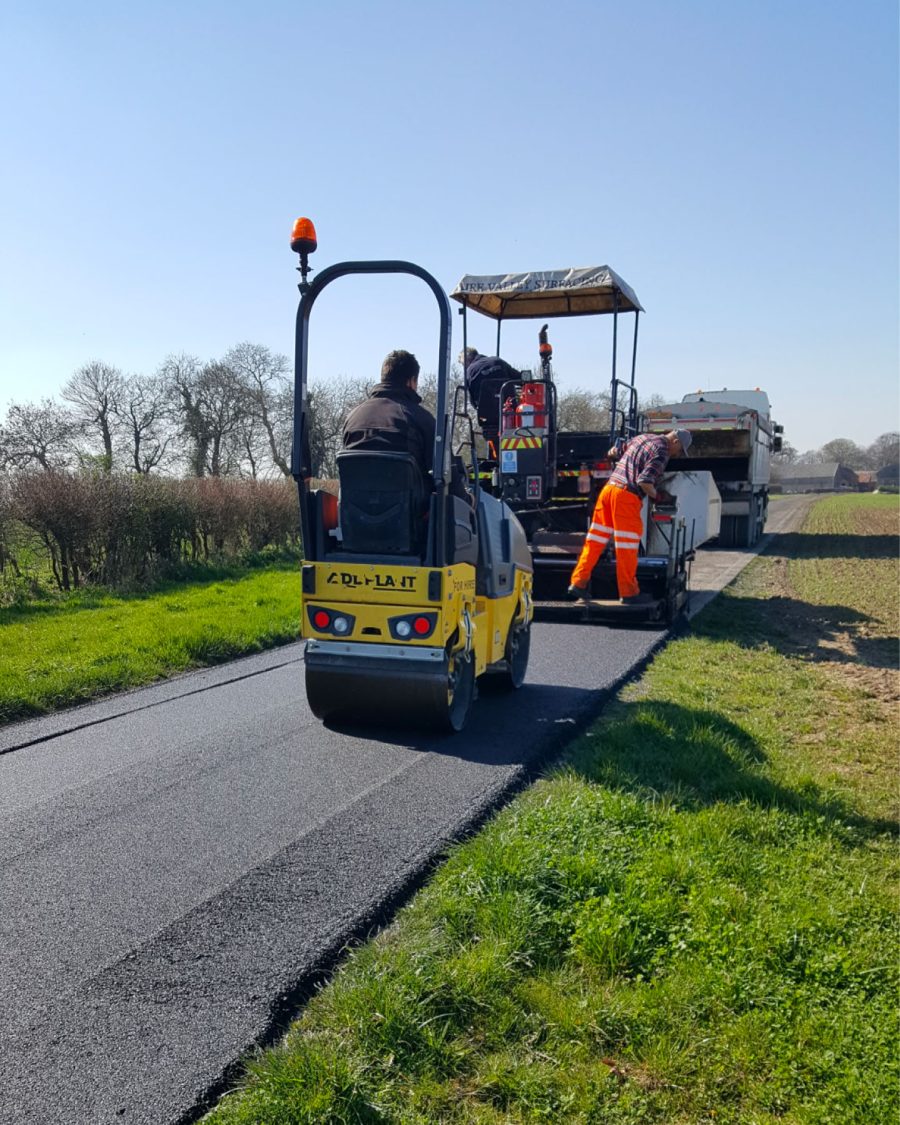
Machine laid tarmac gives a flatter, more even finish and is what we use wherever a paver can get to. Hand laying is for narrow paths, awkward corners, edges up to buildings and anywhere a machine physically will not fit. Most jobs are a mixture of the two.

The ground underneath matters more than the tarmac

A surface fails from the bottom up. If the ground below it holds water, or was never compacted, or has no edge to hold it in, the tarmac will crack, sink at the wheel tracks and break away at the sides no matter how well it was laid.

So most of the time on a surfacing job is spent before any tarmac arrives: digging out, getting the muck away, putting stone in, compacting it, setting the falls so water runs off where it should, and putting in kerbs or edgings. We do that ourselves rather than subcontracting it. If you want the detail, it is on the groundworks page.

One layer or two

A domestic drive is often laid in two layers: a coarser base course to give it strength, then a finer surface course on top for the finish. Something taking farm or commercial traffic will have a thicker base course and sometimes a thicker top as well.

On a sound existing surface we can sometimes lay a single overlay straight over the top. That is cheaper and quicker, but it only works where the surface below is not moving and where the extra height does not cause problems at doorways and gullies.

Black or red

Black is the usual choice and is what most drives, roads and car parks are. Red is laid exactly the same way and is normally used to pick out an entrance, a path or a parking area against black. There is no difference in how they perform.

Bigger surfacing work

Not all of this is domestic. A good part of our tarmac work is private roads, estate roads, farm access tracks, yards and commercial car parks, where the questions are about load, drainage and how long the site can be shut rather than about how it looks from the front gate.
Where we do it

What we use tarmac surfacing for

Driveways

From a single parking space to a long drive with a turning head.

Private and estate roads

Full width resurfacing, or a strip where the traffic actually runs.

Farm tracks and yards

Built up heavy enough for tractors, trailers and wagons.

Car parks

Laid to fall so water goes where it should, with proper edges and kerbs.

Paths and footways

Narrower hand laid work where a paver cannot reach.

Overlays

A new surface over sound existing tarmac where digging out is not needed.

How the job runs

What actually happens

Jjandawskeet narrow tarmac
  1. Come and look

    We measure up, dig a hole to see what is underneath, and put a price in writing.

  2. Dig out and prepare

    The old surface comes out, the muck goes away, and compacted stone goes in to the depth the job needs.

  3. Put an edge on it

    Kerbs, edging blocks or a haunched edge, so the tarmac has something holding it in.

  4. Lay and roll

    Base course and surface course, laid and rolled while it is hot. Keep off it for a day or two afterwards.

Before you ring

Questions we get asked

How long does a driveway take?

Most domestic drives are two to three days from digging out to laying, depending on the size and how much has to come out. We will tell you which days we need when we price it.

Can you lay tarmac over what is already there?

Sometimes. If the existing surface is sound and the levels allow it, an overlay is quicker and cheaper. If it is broken up or moving, laying over the top only hides the problem for a season.

What time of year can it be laid?

Most of the year. It has to go down hot and be rolled before it cools, so hard frost and heavy rain stop us. A cold dry day is usually fine.

How soon can I drive on it?

Leave it a day or two before driving on it, and longer before parking a heavy vehicle or putting a trailer stand or a motorbike stand on it. It carries on hardening for several weeks.

Do you do red tarmac?

Yes. It is laid the same way as black and costs a little more. It is usually used to pick out an entrance or a path.

Why do some drives go soft in hot weather?

Bitumen softens in the heat, which is normal. Point loads such as trailer jockey wheels, bike stands and skip corners are what leave marks. Put a board under anything with a small foot.

What does it cost?

It depends on the area, what has to come out, how far the muck has to travel and whether kerbs are needed. We quote for free, and we come and look at the job rather than pricing it off a map.

Tell us about the job

Send a few details and we will come out and look at it. Quotes are free and there is nothing to sign.

We read every enquiry ourselves. If the job suits us we will ring you back and arrange a time to come and measure up.

Your enquiry

The quickest way for us to reply.
Optional.
So we know whether it is on our patch.
Roughly how big is it, what is there now, and when were you hoping to have it done? A rough idea is fine.

We use what you send here to quote the job and nothing else. Privacy policy.

Call Us Get a Free Quote