
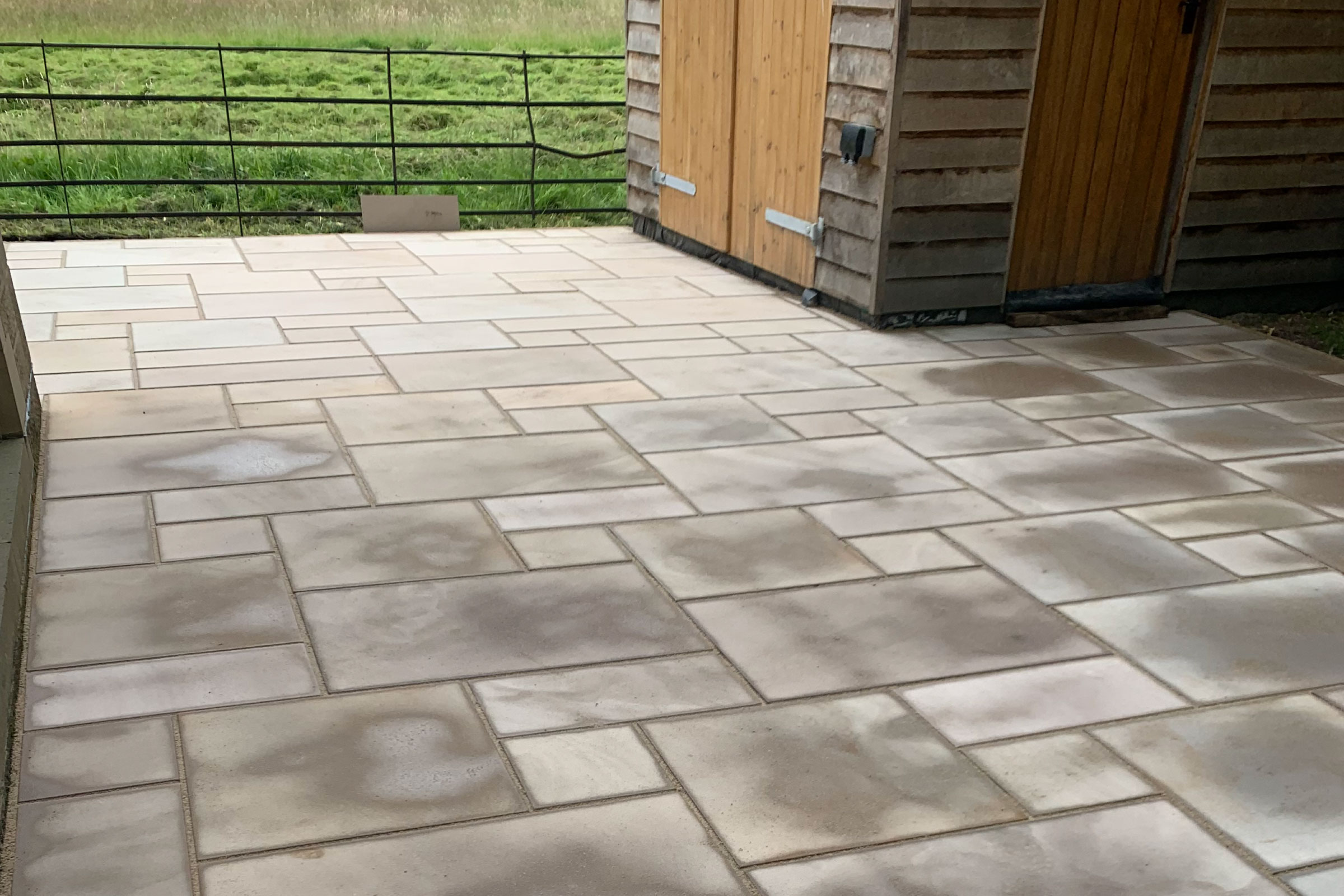
Surfacing contractors, Malton, North Yorkshire

Paving & Flagging

Flags and slabs laid on a full bed with the falls set right, so water runs off them and they are not rocking in two years.

What we lay

Flags and slabs: Indian sandstone, other natural stone, and concrete flags in a range of sizes and finishes. Riven, sawn and textured surfaces, in single sizes or as a mixed size pattern.

Which one suits depends on where it is going and what is around it. Sawn stone looks right against a modern extension and can look wrong against an old farmhouse. Riven sandstone does the opposite. We will bring samples out rather than have you choose off a screen.

Laying them so they stay laid

The common way for a patio to fail is being laid on five blobs of mortar. It looks fine for a year, then water gets under the middle, frost lifts it, the flag rocks and the pointing cracks out.

Flags want laying on a full mortar bed on a compacted sub-base, with the falls set so water runs off and away from the house, and with a proper edge restraint so the outside course cannot creep. Then they get pointed properly rather than brushed over.

Falls, thresholds and damp courses

Two things go wrong with paving next to a building. Water is allowed to run back towards the wall, and the finished level is taken up above the damp proof course. Both cause damp inside and both are avoidable if the levels are set before anything is laid.

Where a doorway makes the levels tight, the answer is usually a channel drain across the threshold rather than trying to fight the fall.

Paving and tarmac together

Plenty of jobs are both. A paved threshold and path where people walk, tarmac where the cars go and turn. Paved sitting areas set into a larger tarmac drive. Since we do both, it is one crew, one price and one set of levels rather than two firms blaming each other about where they meet.
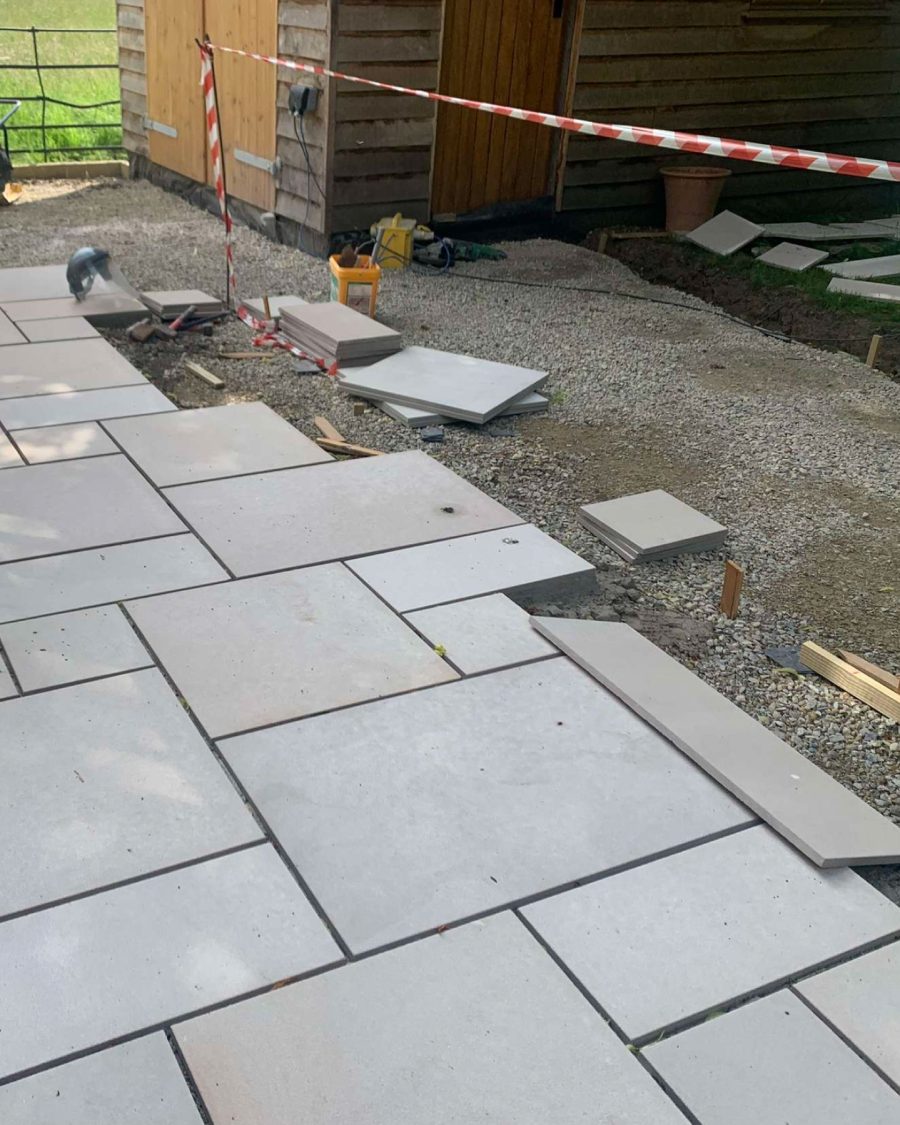
Where we do it

What we use paving & flagging for

Patios

Paved sitting areas, laid to fall away from the house rather than towards it.

Paths

Around a house, down a garden or between buildings.

Entrances and thresholds

Paved areas where a drive meets a door, laid below the damp course.

Courtyards and yards

Larger paved areas at farms, cottages and rural properties.

Steps

Stone treads and risers where the ground changes level.

Edges and borders

Flag or stone edging to gravel, planting and tarmac.

How the job runs

What actually happens

Jjandawskeet narrow paving
  1. Choose the stone

    We bring samples out and look at them against the building, in daylight, wet and dry.

  2. Dig out and set levels

    Down to a firm bottom, then compacted stone, with the finished level set below the damp proof course.

  3. Lay on a full bed

    Every flag bedded fully on mortar, not on blobs, and levelled to the fall as it goes.

  4. Point and finish

    Joints filled and finished properly, and the surface cleaned down.

Before you ring

Questions we get asked

How much fall does a patio need?

Enough that water leaves it rather than sitting in puddles, and always away from the building. It is a small slope and you do not notice it walking on it, but leaving it flat is the reason so many patios hold water.

Will Indian sandstone go green?

Any paving in a shaded, damp spot will grow algae, stone and concrete alike. It washes off. North facing patios under trees need doing more often than open sunny ones.

Can you pave up to my back door?

Yes, but the finished surface has to stay below the damp proof course. If the levels are tight we normally put a channel drain across the threshold rather than raising the paving.

Do you do block paving?

No. We lay flags and slabs, and tarmac. If you want block paving we will tell you honestly that it is not what we do.

Can you lay paving and tarmac on the same job?

Yes, and a lot of jobs are both. Doing it with one crew means the levels where they meet are right, which is normally where two separate firms come unstuck.

Tell us about the job

Send a few details and we will come out and look at it. Quotes are free and there is nothing to sign.

We read every enquiry ourselves. If the job suits us we will ring you back and arrange a time to come and measure up.

Your enquiry

The quickest way for us to reply.
Optional.
So we know whether it is on our patch.
Roughly how big is it, what is there now, and when were you hoping to have it done? A rough idea is fine.

We use what you send here to quote the job and nothing else. Privacy policy.

Call Us Get a Free Quote