
Surfacing contractors, Malton, North Yorkshire

Groundworks

Nearly every surface that fails, fails because of what is underneath it. Groundworks is the part of the job nobody sees, and it is the part that decides how long the surface lasts.

The part nobody sees

Almost every surface that fails, fails because of what is underneath it. Not enough was dug out, the stone was not compacted, the water had nowhere to go, or there was no edge holding the surface in. None of that is visible once the tarmac is down, which is exactly why it gets skimped.

We do our own groundworks rather than subcontracting them, so the same firm that lays the surface is the one that prepared the ground for it. If something is wrong there is nobody else to blame, which concentrates the mind.

Excavation and muck away

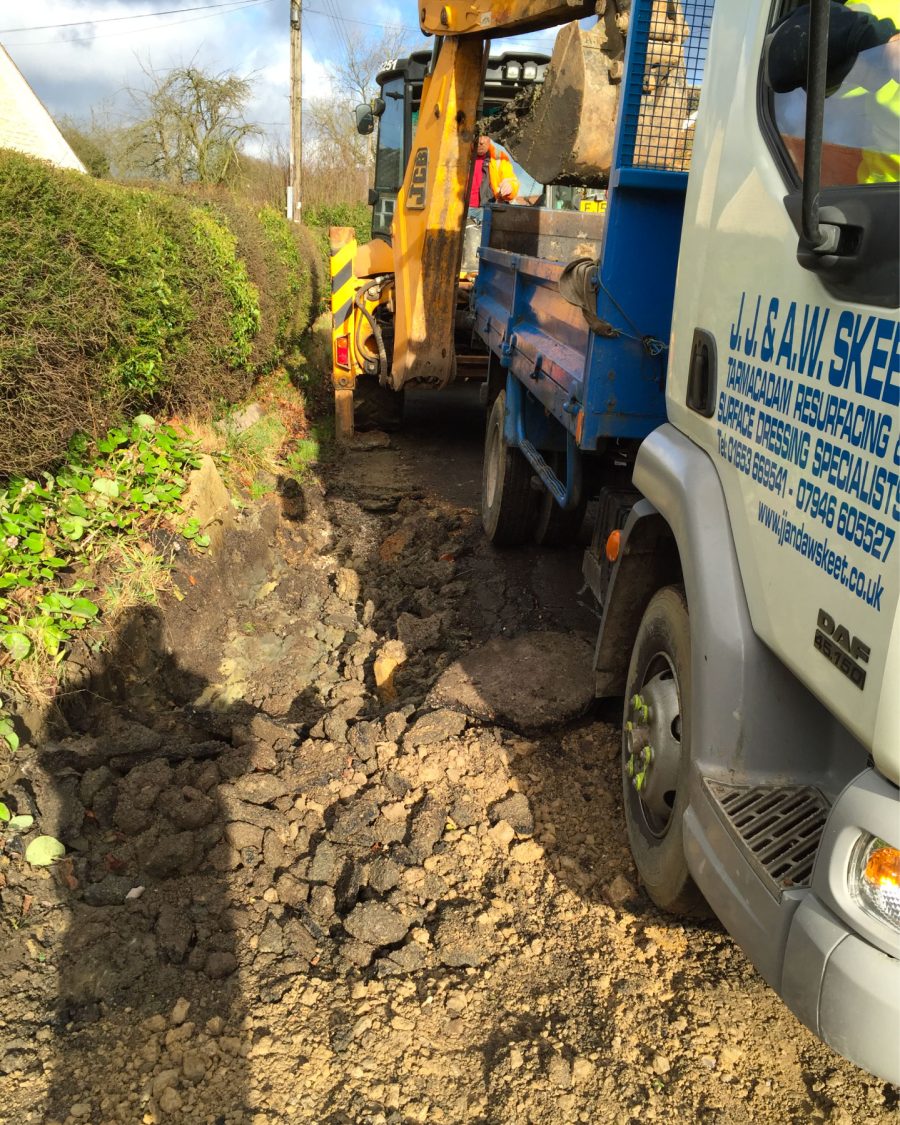
Digging out to the depth the job needs, and getting the excavated material off site. How deep depends on what is going on top and what the ground is like: soft ground and heavy traffic both mean digging deeper and putting more stone in.

Drainage

Water is what destroys surfaces, so most of a good groundworks job is about deciding where it goes. That might be channel drains across an entrance, gullies in a yard, a soakaway, land drains along a track, or simply getting the falls right so it runs off on its own.

It is also about keeping water away from buildings. Getting a fall wrong by a small amount is how a new drive ends up pushing rain at a doorway.

Kerbs, edgings and haunching

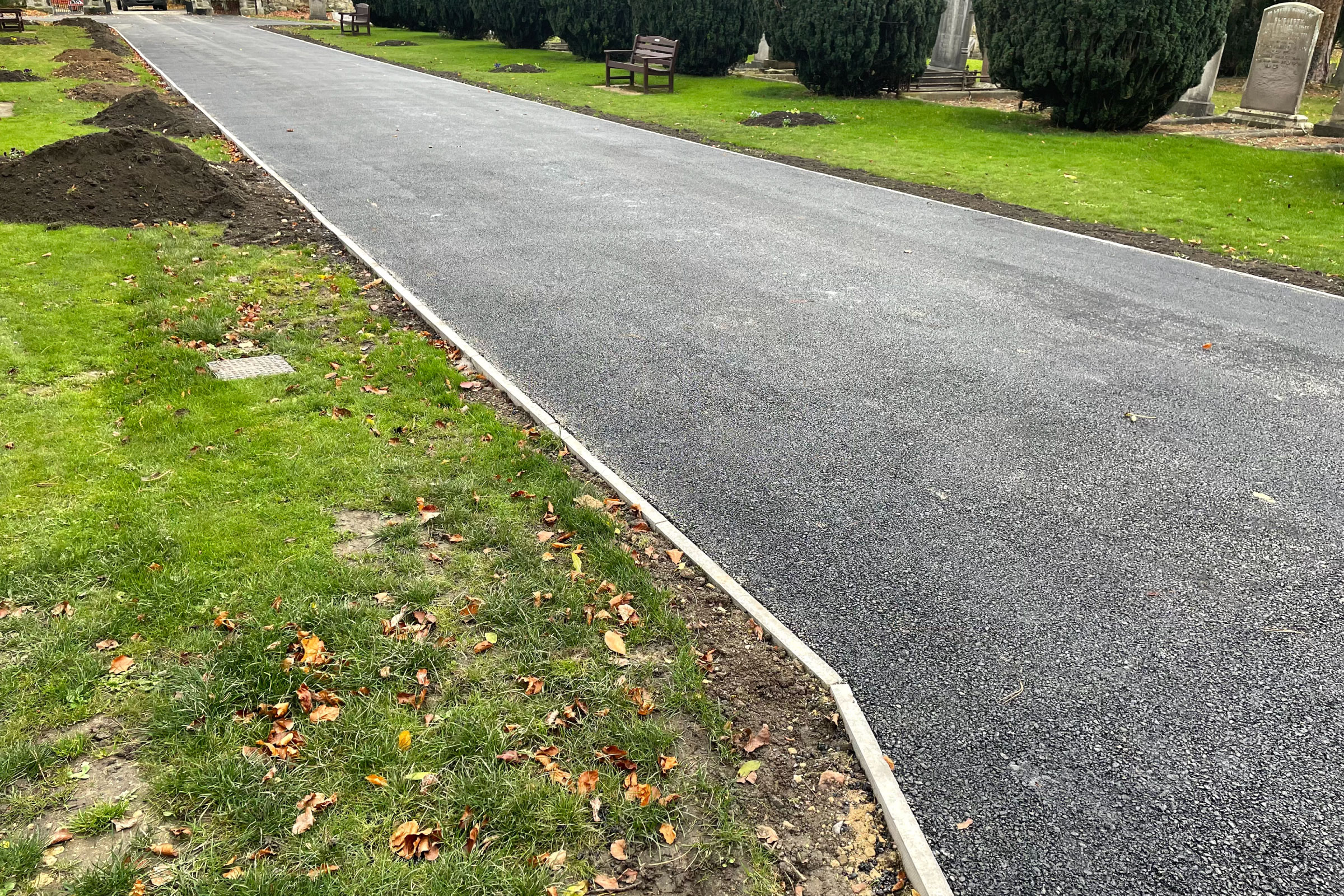
A surface with no edge crumbles away at the sides as soon as anything drives over the edge of it. Concrete kerbs, edging blocks, stone edges or a haunched edge all do the same job: hold the surface in and give it something to be compacted against.

What we are, and what we are not

We are a surfacing contractor that does its own groundworks. That covers excavation, drainage, sub-bases, kerbs, hardstanding and bases for things like oil tanks, bin stores and containers.

We are not a civil engineering firm and we do not pretend to be. If a job needs a structural design, a drainage calculation or a building control sign off, it needs an engineer, and we will tell you that rather than guess.
Where we do it

What we use groundworks for

Preparing for surfacing

Digging out, sub-base, levels and falls, ready for tarmac or flags.

Drainage

Channel drains, gullies, soakaways and land drains, where water needs somewhere to go.

Kerbs and edgings

Concrete kerbs, edging blocks and haunching, so a surface has an edge to hold it.

Levelling and regrading

Getting a fall right so water runs away from a building rather than towards it.

Muck away

Excavated material loaded and taken off site.

Bases and hardstanding

Bases for oil tanks, bin stores, containers and hardstanding for machinery.

How the job runs

What actually happens

Jjandawskeet narrow groundworks
  1. Dig a trial hole

    We look at what is actually under there rather than guessing, because it changes both the price and the depth.

  2. Set the levels

    Where the finished surface has to sit, and which way the water will run off it.

  3. Dig out and cart away

    Down to a firm bottom, with the excavated material loaded and taken off site.

  4. Stone, drains and edges

    Sub-base in compacted layers, with drains, gullies and kerbs in before anything is surfaced over them.

Before you ring

Questions we get asked

Do I need drainage or can water just run off?

Often it can just run off, if there is somewhere for it to go and the falls are right. It becomes a drainage job when the water would end up against a building, on a neighbour, or standing in the middle of a yard.

How deep do you dig out?

It depends on the ground and on what is going on top. A footpath needs far less than a yard that takes loaded wagons. We dig a trial hole first so the price is based on what is actually there.

Can you do the groundworks and let somebody else surface it?

Yes, though most people have us do both. If you are having the surfacing done by someone else, tell us at the quoting stage so we finish at the level they need.

What happens to the material you dig out?

It is loaded and taken away. Where it is clean topsoil or stone and you have a use for it on site, we will leave it where you want it instead, which saves on the muck away.

Tell us about the job

Send a few details and we will come out and look at it. Quotes are free and there is nothing to sign.

We read every enquiry ourselves. If the job suits us we will ring you back and arrange a time to come and measure up.

Your enquiry

The quickest way for us to reply.
Optional.
So we know whether it is on our patch.
Roughly how big is it, what is there now, and when were you hoping to have it done? A rough idea is fine.

We use what you send here to quote the job and nothing else. Privacy policy.

Call Us Get a Free Quote