What surface dressing is, in plain English
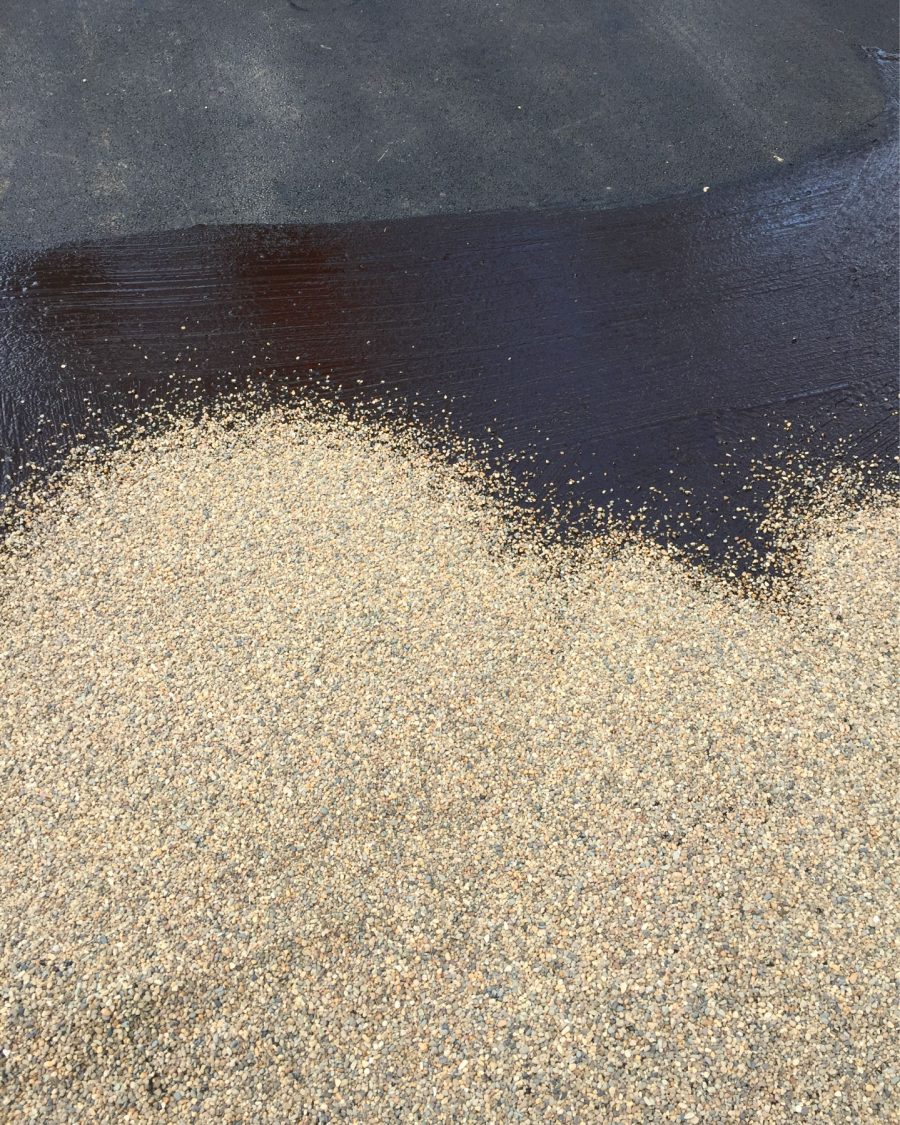
Hot bitumen is sprayed onto the existing surface, stone chippings are spread over it straight away, and the whole lot is rolled in. The bitumen holds the chippings and seals the surface underneath so water cannot get into it.
It is the same thing the council does to country roads, and it is why those roads are loose and noisy for a fortnight afterwards. Done properly, on a surface that is worth doing, it is by a distance the cheapest useful thing you can have done to a road or a drive.
When it is worth doing
Surface dressing is a maintenance job, not a repair. It is right when the surface has gone grey and open, when the stone at the top has started to show through and fret away, or when a track is sound but the water is starting to find its way in. Sealing it at that point costs a fraction of digging it out later.
It also gives a worn surface its grip back, which matters on a sloping drive or a farm track that gets wet.
When it is not the answer
If a surface is moving under load, if the edges have gone, if there are potholes right through to the ground below, or if the whole thing is rutted, dressing it will not fix any of that. It will look better for a season and then the same faults will come back through.
We will tell you if that is what we find. Sometimes the answer is patching first and then dressing. Sometimes it is that the job needs resurfacing properly, and we would rather say so than take the money for a coat of dressing that will not last.
What it looks like afterwards
Loose for a week or two. That is normal and it is part of how it works: traffic beds the chippings into the bitumen. Drive slowly to start with, especially past parked cars and windows, and we will come back and sweep off whatever has not bedded in.